

Albuquerque Elopement Photographer — Where to Elope Near ABQ
Albuquerque sits at the crossroads of everything that makes New Mexico worth photographing. Within ninety minutes of downtown, you can stand inside a slot canyon carved from volcanic ash, ride a tramway to 10,000 feet, or exchange vows on the rim of a gorge that drops 800 feet to the Rio Grande. The geography here is not subtle. It just requires two people willing to show up and mean it. For something more intimate, explore my guide to Santa Fe elopement photography.
As an Albuquerque elopement photographer, I spend a lot of time in these landscapes — not scouting for generic backdrops, but learning how the light moves through specific places at specific hours. That knowledge is the difference between a photograph that could have been taken anywhere in the Southwest and one that could only have been made here. For something more intimate, explore my guide to best elopement locations in Santa Fe.
Tent Rocks (Kasha-Katuwe)
Kasha-Katuwe Tent Rocks is about 45 minutes southwest of Albuquerque on Cochiti Pueblo land, and it is one of the most otherworldly landscapes in the state. The cone-shaped rock formations — sculpted from layers of volcanic tuff over millions of years — create a narrow slot canyon that opens into a valley floor that looks like it belongs on another planet. For something more intimate, explore my guide to Tent Rocks elopement.
The light here is best in the morning, when it reaches down into the canyon and bounces between the walls. Afternoon can work, but the canyon falls into shadow earlier than you'd expect. One thing to know: access is managed by Cochiti Pueblo, and the site has its own rules around permits, hours, and what's allowed. I handle the logistics so you don't have to think about it. What you need to think about is wearing shoes you can hike in, because the trail to the best spots is a legitimate scramble. I also photograph Albuquerque wedding photography throughout the region.
Sandia Mountains and the Sandia Peak Tramway
The Sandias define Albuquerque's eastern skyline, and at sunset they turn the shade of pink that gave them their name. The tramway takes you from the desert floor to the crest in fifteen minutes — a 4,000-foot elevation change with views stretching west to Mount Taylor. I also cover Ghost Ranch — one of New Mexico's most remarkable settings.
The summit works in almost any season. Winter brings snow and severe quiet. Spring and fall offer clear sightlines. But I often prefer the Sandia Crest road, which gives you access to pulloffs and overlooks most visitors pass without stopping. Those are the better frames — less crowded, more personal, and the light is more varied because you're working with the terrain rather than standing on top of it.
Jemez Springs
An hour north of Albuquerque, the Jemez Valley is a corridor of red rock, hot springs, and river canyon that feels removed from everything. The landscape shifts dramatically within a short drive — open mesa to narrow canyon to alpine meadow.
The photography here is different from the high desert. The river gives you reflections and movement. The red rock walls bounce warm tones into shadows like natural fill light. Soda Dam, a travertine formation just north of town, makes for a backdrop no one will mistake for stock photography. If you want an elopement that feels tucked away and a little wild, Jemez is the answer.
Bosque del Apache
Bosque del Apache is a national wildlife refuge 90 minutes south of Albuquerque, near Socorro. Most people know it for the sandhill cranes that winter there by the thousands. But the bosque — the cottonwood forest along the Rio Grande — is a landscape I keep returning to for its visual calm. It is quiet in a way that changes how people hold themselves.
Winter mornings are the sweet spot. The light is cool and diffused before it sharpens. For couples who want their elopement to feel meditative rather than dramatic, this is the place. Permits are straightforward through the U.S. Fish and Wildlife Service.
Rio Grande Gorge
The gorge is near Taos — about two hours north of Albuquerque. The bridge is the famous shot, but I prefer the rim trail where you get the depth of the canyon without the guardrails and the tourists. The Rio Grande is 800 feet below, and the high desert stretches flat to the horizon in every direction.
Late afternoon is the time to be here. The gorge walls catch warm light that brings out every layer of basalt. Wind can be a factor — the rim is exposed — so plan for it. Hair and veils will move. That can be a good thing if you let it.
Petroglyph-Adjacent Desert (West Mesa)
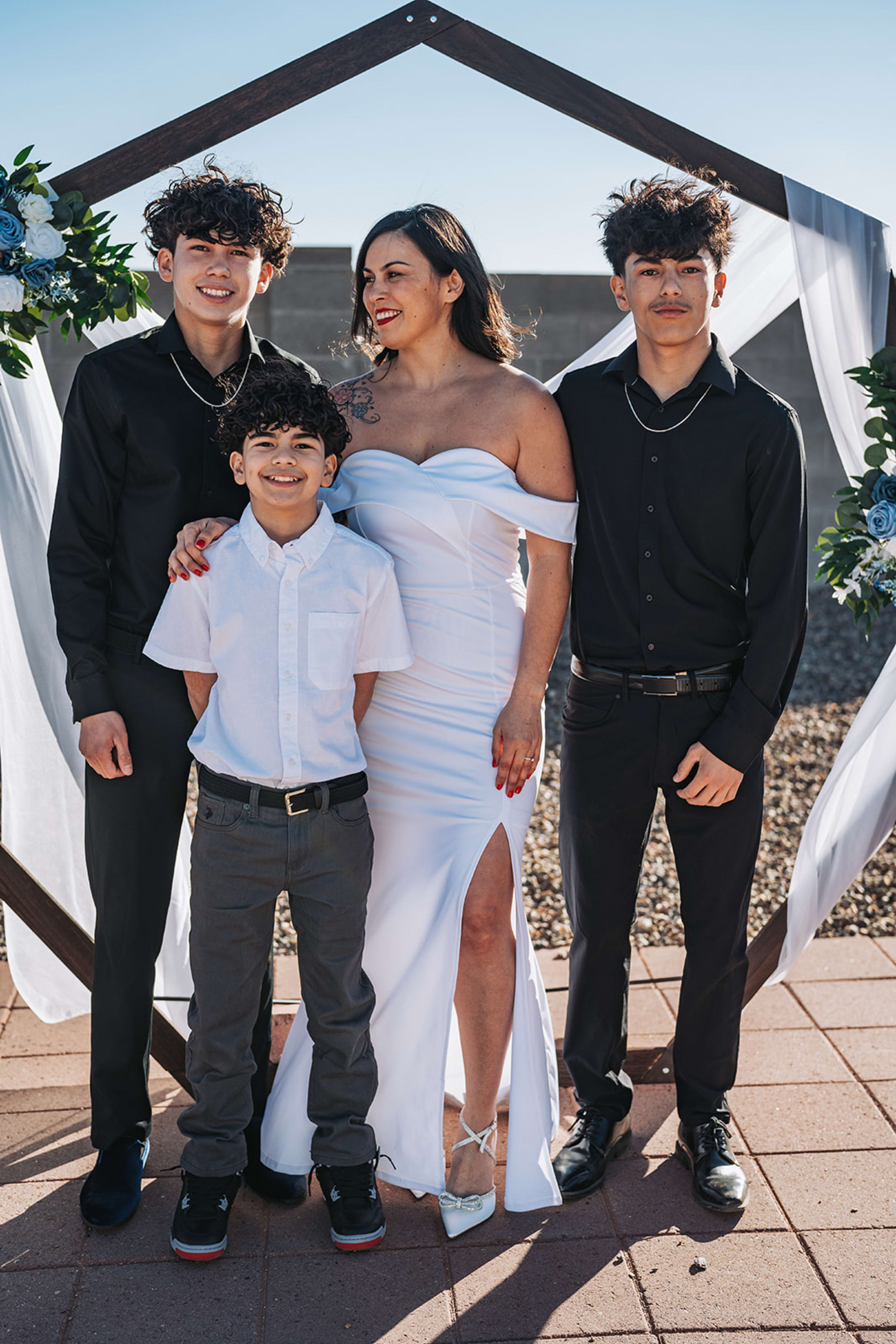
The Petroglyph National Monument sits on Albuquerque's west side. The petroglyphs themselves are off-limits for ceremony use, but the surrounding West Mesa desert — black basalt, dry grass, unobstructed sky — is open and accessible. The volcanoes trailhead puts you on a ridge with 360-degree views of the city, the Sandias, and the western mesas.
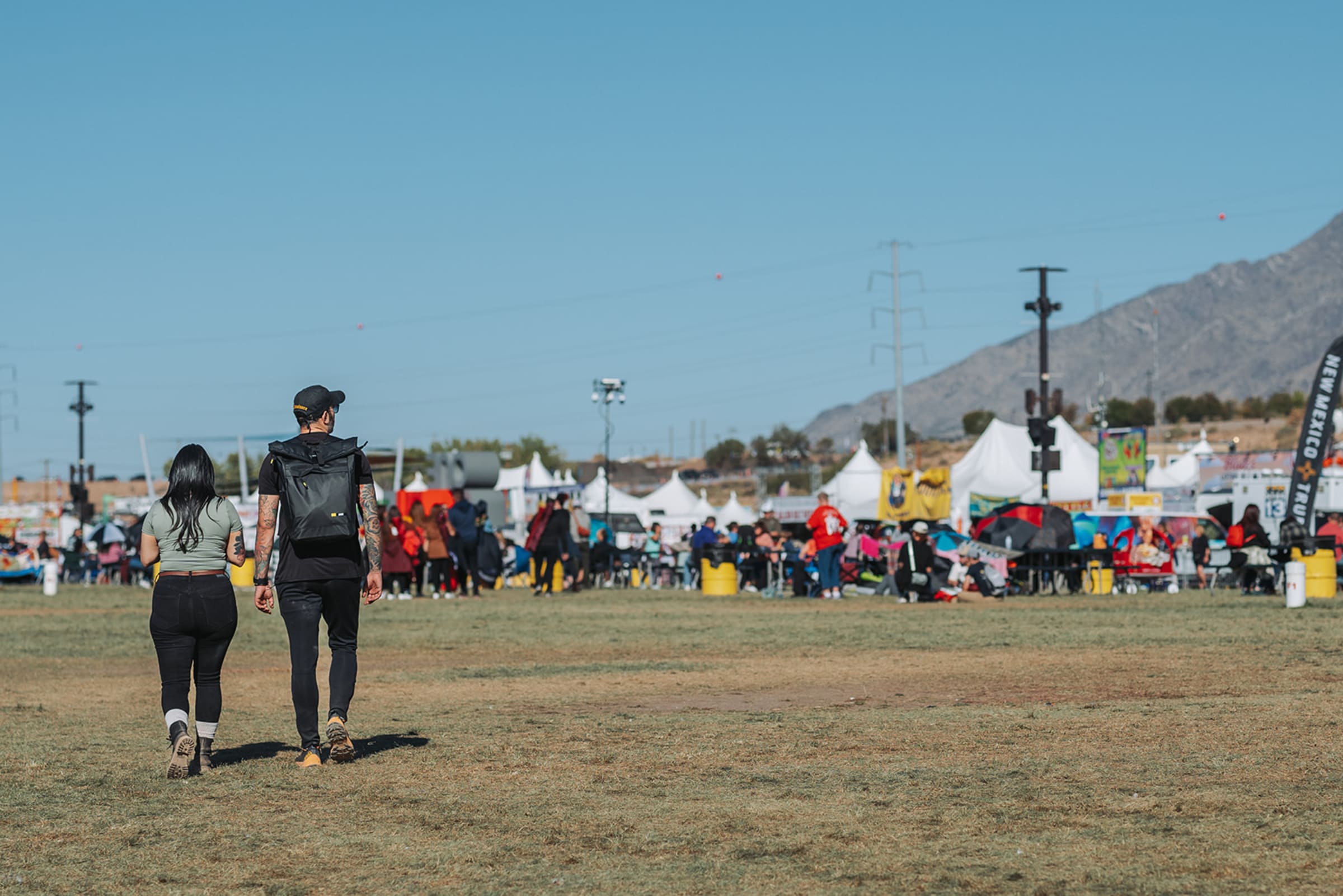
This is the location for couples who want something stark and graphic. The color palette is limited — black rock, tan earth, blue sky — and that restraint is what makes the images work. Nothing competes. It is just you and the geology.
Logistics — Permits, Timing, and Weather
Every location has its own permitting situation — Pueblo land, national forest, BLM, wildlife refuge. I handle all of it as part of my elopement coverage. You tell me where you want to be, and I make sure we can legally be there.
Best times to elope near Albuquerque: October through early December and March through May. You avoid summer heat, monsoon unpredictability, and the deep cold of January. The light is best in fall and early spring — lower sun angle, warmer tones, longer golden hours.
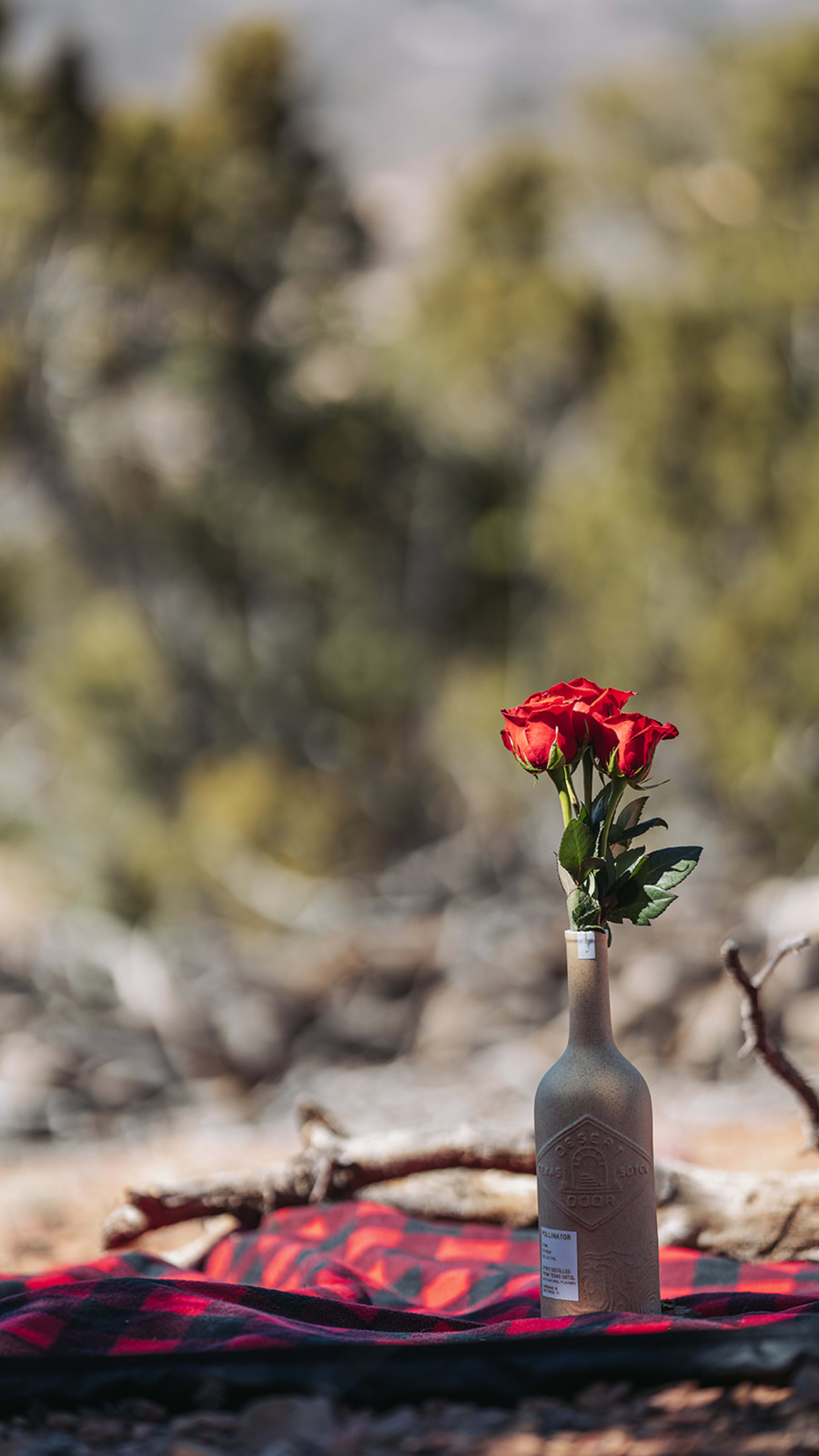
Weather: New Mexico weather is honest, but it can change within an hour at elevation. I always have a backup plan and enough flexibility in the timeline to pivot without losing the day.
What Sets an Albuquerque Elopement Apart
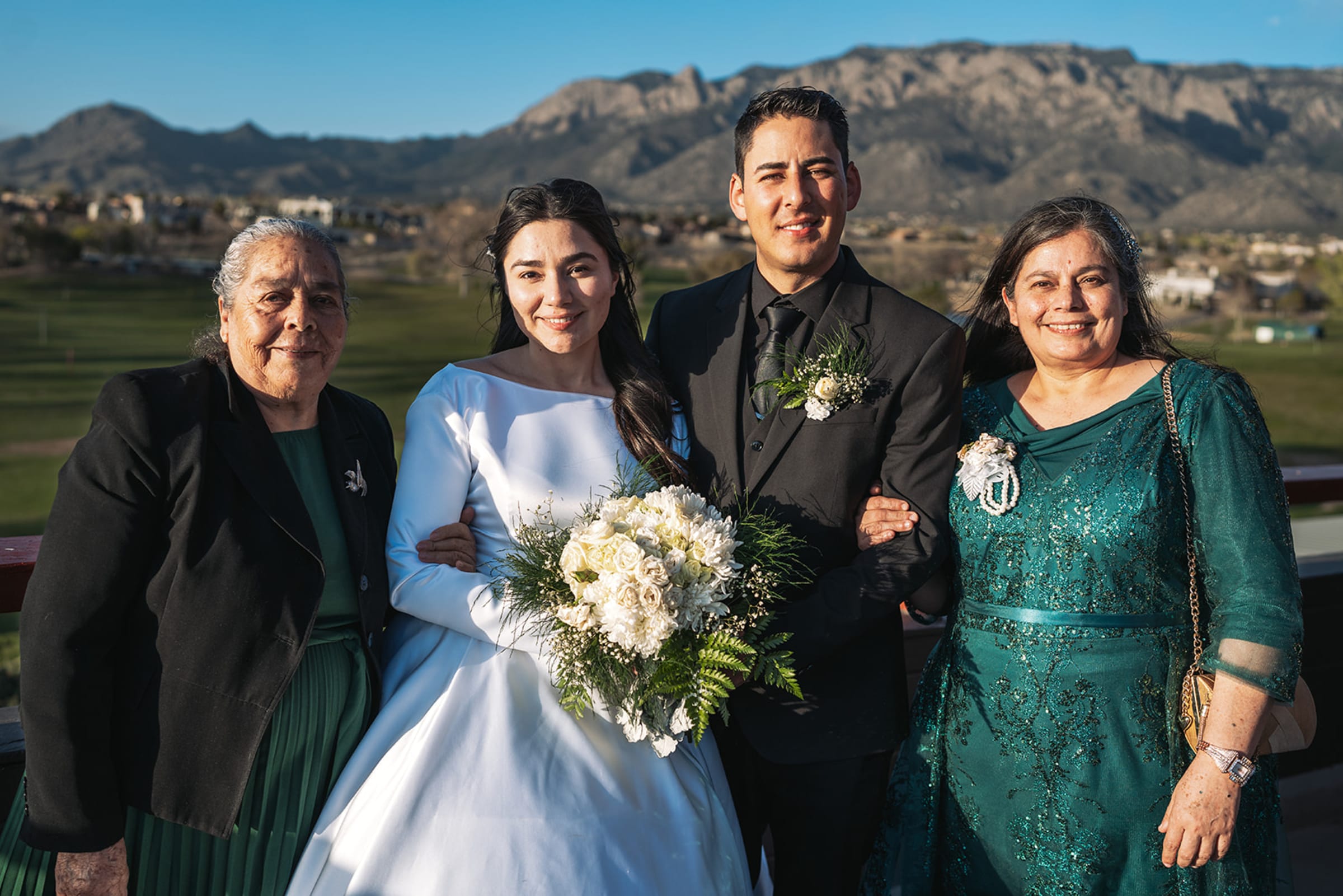
Albuquerque elopements feel different from Santa Fe elopements. Santa Fe is intimate, historic, and curated. Albuquerque is raw. The landscapes here are bigger, wilder, and less polished. That is not a criticism. It is a reason people choose this city.
The Rio Grande cuts through the center of the valley, and on either side the terrain rises into something distinct. East: the Sandia Mountains, forested and steep, with a tramway that covers 2.7 miles and nearly 4,000 vertical feet. West: the volcanic escarpment and the black basalt mesas of Petroglyph National Monument. North: the Jemez corridor, all red rock and hot springs and river canyon. South: the bosque, where cottonwoods line the river and sandhill cranes winter by the tens of thousands.
As an Albuquerque elopement photographer, I have worked in all of these environments across every season. That experience translates directly into your images. I know that the Sandia Crest parking lot is crowded at sunset but the pulloffs on the south side of the road are empty. I know that Soda Dam in the Jemez Valley photographs best in the morning when the travertine formation catches directional light. I know which trailheads at Tent Rocks fill up first and which approach gives you a quieter ceremony site. For another slot canyon option, see my guide to Diablo Canyon elopements in Santa Fe.
This is the kind of knowledge that comes from spending years in a place, not from scouting it the week before. If you are looking for an Albuquerque elopement photographer who treats the landscape as more than a backdrop, Casey Addason Photography is built on that understanding.
Photo and Video for Your Elopement Day
Every elopement I photograph includes both photo and video coverage. The ceremony gets filmed with real audio from your vows and your officiant. The portraits and the in-between moments get photographed. You walk away with a full gallery and a short documentary film that sounds like the actual day, not a highlight reel set to licensed music.
This matters more for elopements than for larger weddings, because elopements have fewer witnesses. Your film becomes the way you share the day with the people who were not there. When your family watches it and hears the words you said to each other in the Jemez Valley or on the rim of the Rio Grande Gorge, that is an experience no photo gallery alone can deliver. For couples also exploring northern New Mexico, check out my Ghost Ranch elopement guide. You can also review Santa Fe elopement packages and pricing to compare options.
How I Photograph Elopements
My elopement coverage runs 2 to 4 hours — enough time for getting ready (if you want it documented), the ceremony, and portraits in the landscape. I shoot both photo and video, so you walk away with a complete record of the day, not just stills.
My approach is documentary first, editorial second. I photograph what is happening as it happens. Then, when the ceremony is done and the pressure is off, we make portraits together — and that is where the landscape becomes a collaborator rather than a backdrop. I direct when direction is needed and disappear when it is not.
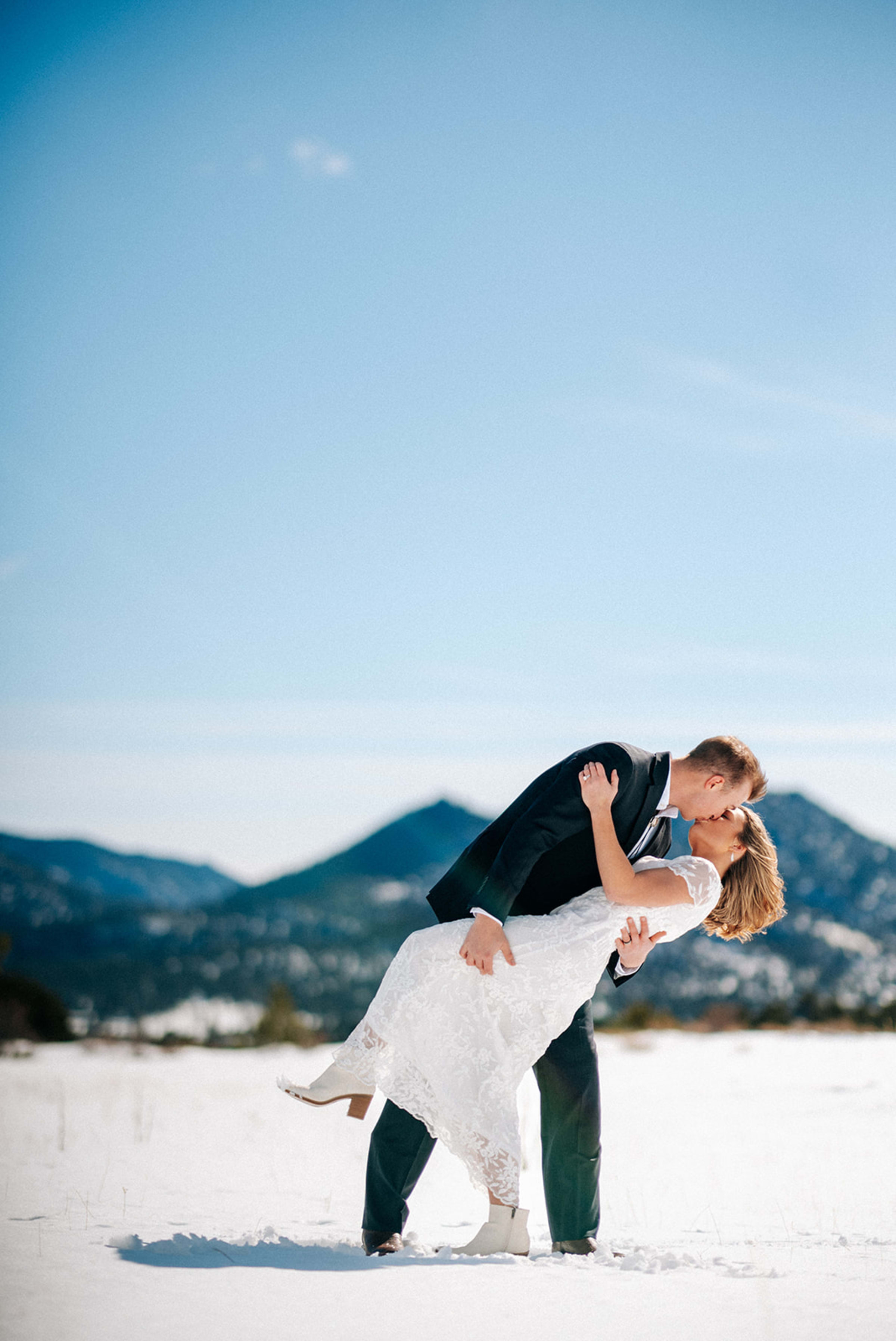
Delivery is 3 to 4 weeks. Every image is individually edited. No presets, no batch processing, no assembly line.
Work With an Albuquerque Elopement Photographer Who Knows the Land
If you are planning to elope somewhere near Albuquerque and you want a photographer who has already done the work of learning these landscapes — where the light falls, where to park, where the best frames hide — I am that photographer. Casey Addason Photography is based in New Mexico, and this is the terrain I know best.
You can view my elopement work in the portfolio, check pricing and packages, or reach out directly to tell me what you have in mind.
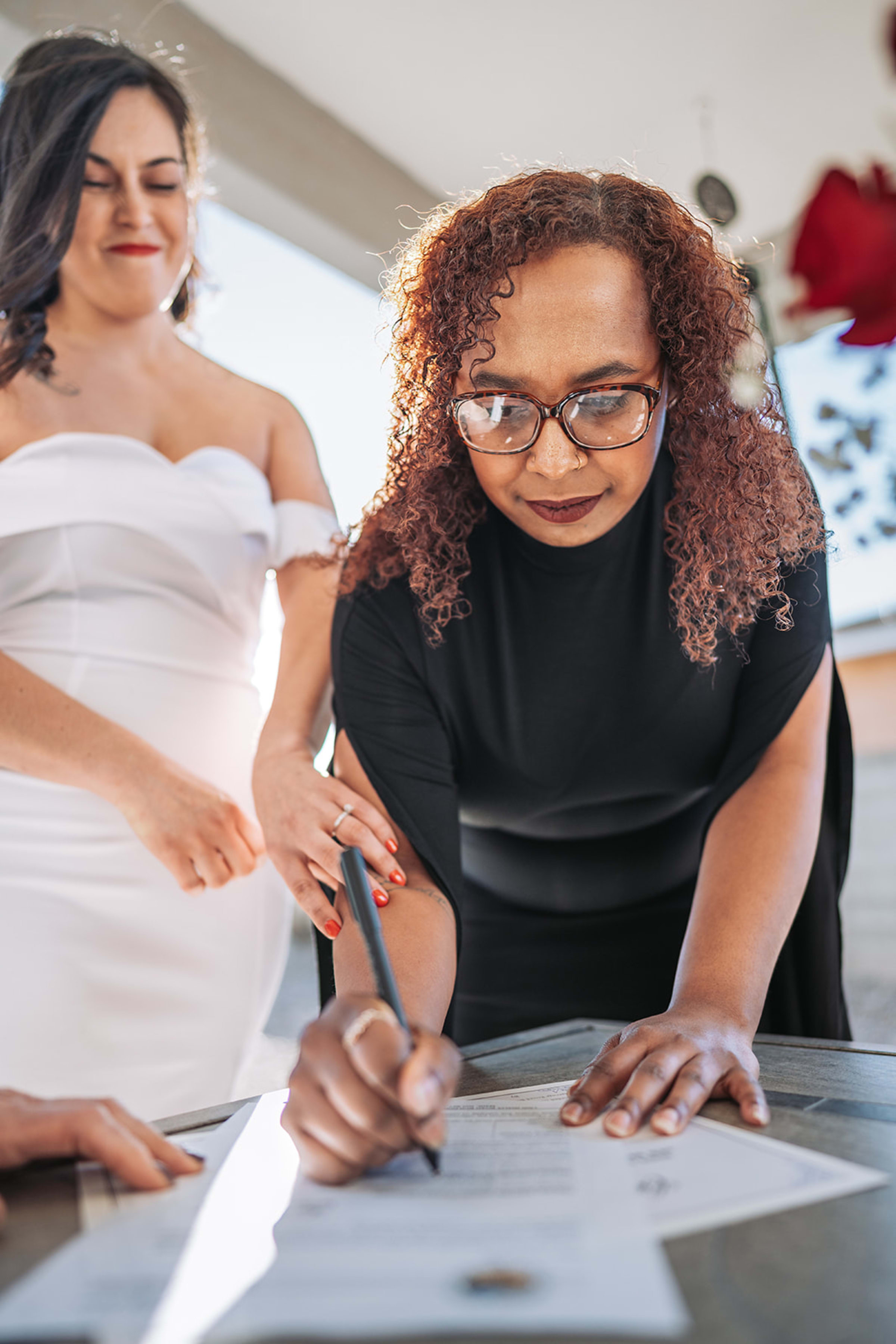
Casey Addason is an Albuquerque wedding photographer and Santa Fe wedding photographer covering elopements, weddings, and events across New Mexico — photo + video.
